Start a league. Fill the boards.
Most leagues start with a few friends, a bar with room for four courts, and one night a week. Here's how to go from that to a full season.
1. Pick a night, a venue and a format
Bars, breweries, legion halls and curling clubs make good homes: they want a busy weeknight and you need floor space. Each court needs roughly 8 to 10 feet of width and 40 or more feet of length, so measure before you commit. Then decide on a format: blind draw doubles is the easiest way to mix new and experienced players, while bring-your-own-partner suits a more competitive crowd.
2. Decide whether to sanction
You have three routes:
- ACL. Anyone can sign up to be an ACL local director and run ACL events, where players earn points and ratings through the ACL's own software.
- ACO. The ACO sanctions leagues and tournaments through its network of certified officials.
- Independent. Set your own rules and season. Many independent leagues still follow ACL or ACO rules for setup and scoring.
Sanctioning brings structure, rankings and a path to bigger events. It also means your players need that organization's approved bags. Compare them on who runs cornhole.
3. Sort out equipment
Plan for at least four sets of regulation boards and good lighting. Sanctioned leagues need certified equipment. Our rules and equipment guide covers the specs, and the manufacturer directory lists who makes what.
4. Run the night with software
ACL events run on the ACL's director software. Independent leagues often use tournament apps such as Scoreholio to handle brackets, blind draws and standings, which saves an hour of whiteboard math every week.
5. Get found
- List your league in the Hub. Add a director so players can message you directly.
- Add your tournaments to the events calendar.
- Start a Facebook group for night-of updates and photos. It's where most local players look first.
6. Give your league a home online
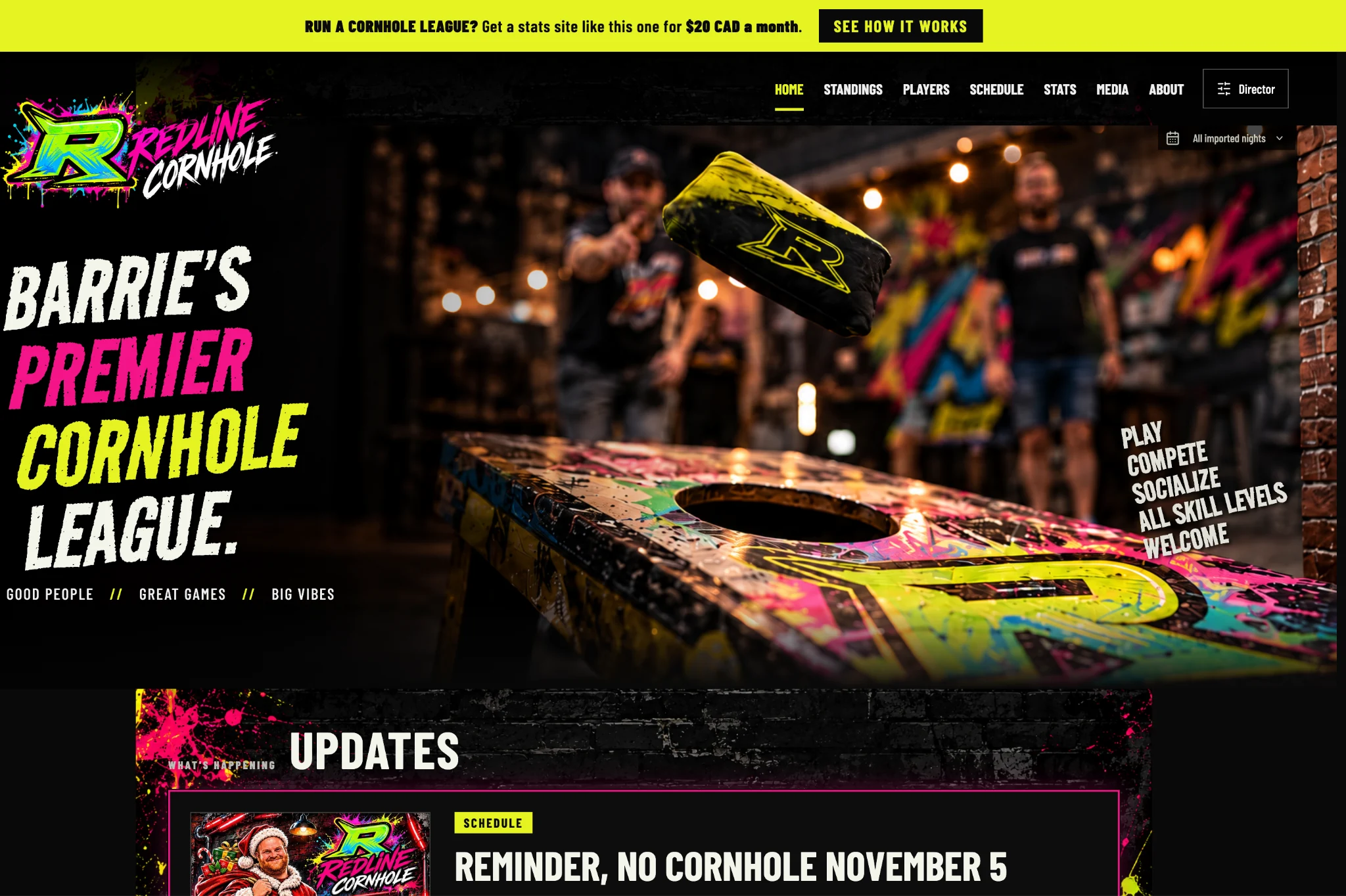
A website with standings and player stats keeps people coming back between league nights and makes it easier to win sponsors.